FSBI FUNDING
PhD Studentship
Date & time :
30 January
17:00 PM GMT
What are FSBI PhD Studentships?
How to Apply
Please send these completed forms and any supporting documents to
studentships@fsbi.org.uk and theteam@fsbi.org.uk
Short-listed applicants will be invited for interview, usually held in late February/early March.
Subject-related inquiries should be addressed to theteam@fsbi.org.uk
Assessment of Applications
The Studentship applications are assessed by an independent committee of Council Members on the basis of the following criteria.
For selection for interview, applicants are assessed for:
Scientific excellence.
Feasibility of the project, considering the the experience of the applicant.
Academic background, including previous qualifications (first- or second-class honours, MSc) and other relevant experience.
At interview, applicants are assessed for:
Quality of science.
Knowledge of the research area; Motivation.
The value of potential outputs.
All applications must be accompanied by a letter of support from the proposed PhD supervisor.
The Committee's decision is final but applicants can request feedback about their evaluation and are free to apply again in subsequent rounds.
Reporting Information for Current Students
As per the terms and conditions of your award, FSBI students must submit annual updates on their progress for FSBI Council and the newsletter. The report should be attached to the downloadable cover page. See paragraphs 3.7-3.9 of the terms and conditions for full details.
Meet Our Current FSBI Students
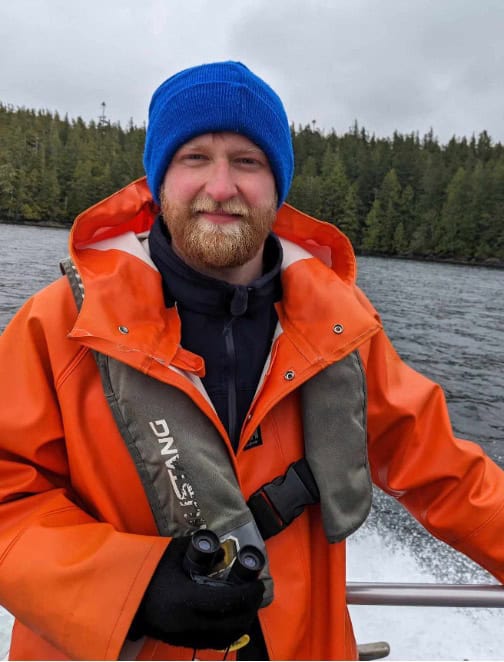
Mark McInnes (2025 cohort)
University of Glasgow
Rethinking measurement of thermal preference in fishes: from
apparatus design to ecological relevance.
Mark is a PhD student at the University of Glasgow, researching thermal preference behaviour in fishes and its ecological relevance. Mark will focus on assessing experimental systems used to measure thermal behaviour at the individual level and examining how design aspects can influence measurement. He also explores how individual differences in temperature preference relate to behavioural and physiological traits, and whether laboratory measures reflect patterns observed in more natural settings. Mark developed an interest in methodological design and behavioural ecology during his Master’s research, which showed that experimental arena size can bias estimates of sociability in threespine sticklebacks. Through his PhD, Mark aims to improve the reliability and ecological relevance of behavioural assays used across fish biology and thermal ecology.
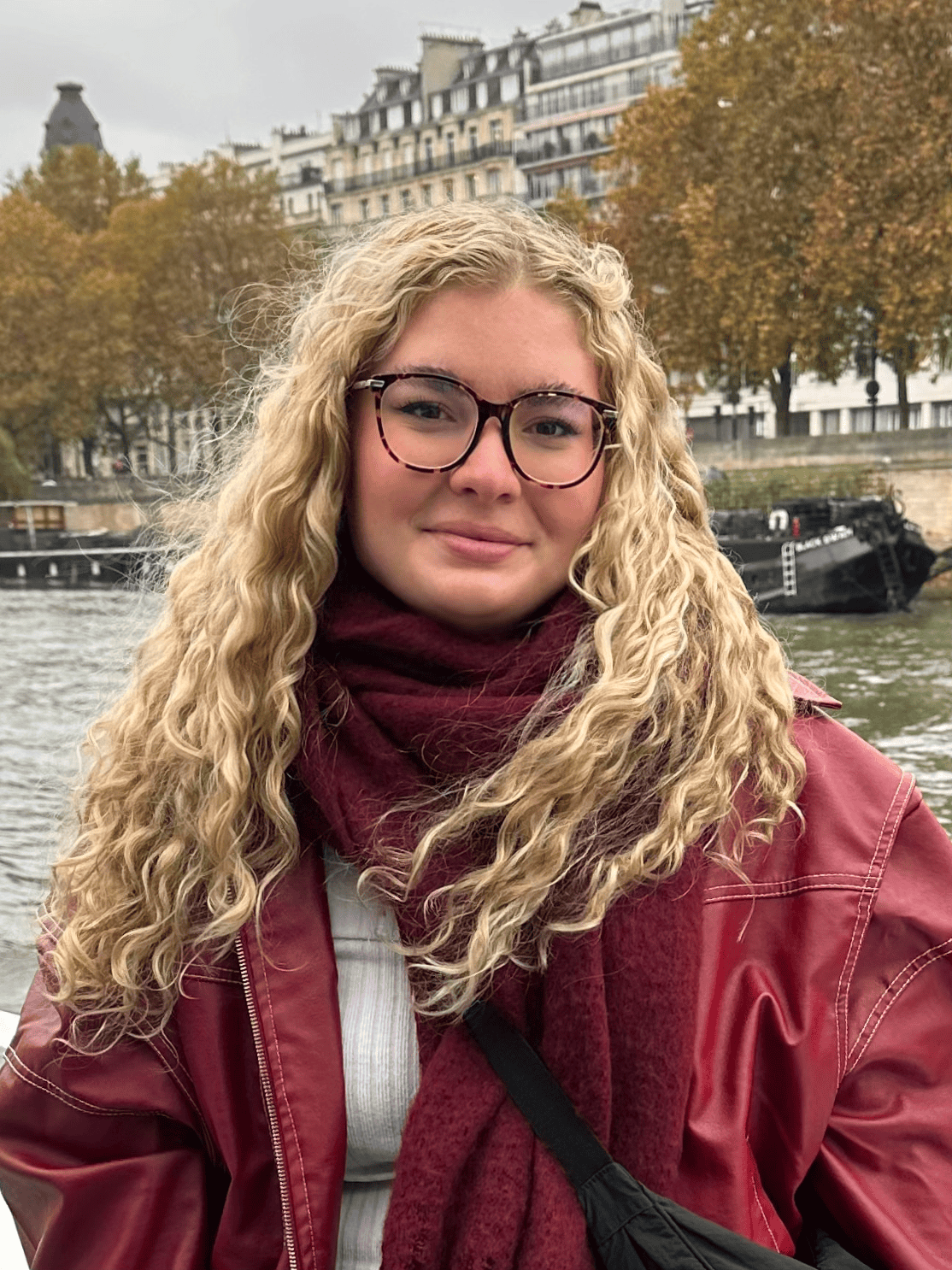
Elizabeth Weldon (2025 cohort)
University of Glasgow
The Role of Habitat Mosaics on Local Scale Distribution of the
Critically Endangered Flapper Skate (Dipturus intermedius)
Elizabeth is a PhD student at the University of Glasgow, focusing on the
conservation ecology of elasmobranchs, with the critically endangered flapper skate
(Dipturus intermedius) in Scottish waters as a model species. Understanding fine-
scale habitat use, site fidelity, and key life-history stages is vital for developing
protection measures that reflect how flapper skate use their environment, yet these
aspects of their ecology remain poorly understood. To address this, her research will
investigate habitat use, short-term movements, life-history stages, and public
perceptions to inform effective, evidence-based conservation strategies. Her MSc by
Thesis explored the cultural dimensions of human-elasmobranch interactions,
showing that sharks, skates, and rays hold significant cultural and emotional value
worldwide, insights that can support community-informed conservation. She also
gained practical experience through fisheries social science and kelp forest
monitoring. Building on this foundation, her PhD will integrate ecological and social
science approaches to support the recovery of flapper skate and other threatened
elasmobranchs.
e.weldon.1@research.gla.ac.uk
Helen Weber (2024 cohort)
University of Edinburgh
Plight of the stingray: conserving cownose rays using genetic tools.
Learn more.
Helen is a doctoral student at the University of Edinburgh where she studies conservation genomics with a focus on understudied and exploited marine species that lack legal protections. She uses genetic tools to guide effective conservation and management strategies for her study group, the cownose rays. Helen’s research began with a master’s degree investigating the population structure of cownose rays in the western Atlantic, work that contributed to federal protection efforts in the United States and resulted in the halting of the hunting competitions targeting this vulnerable group. Building on this work, her PhD research examines cownose ray genetics on a global scale, providing crucial insights into their worldwide population dynamics and conservation needs.
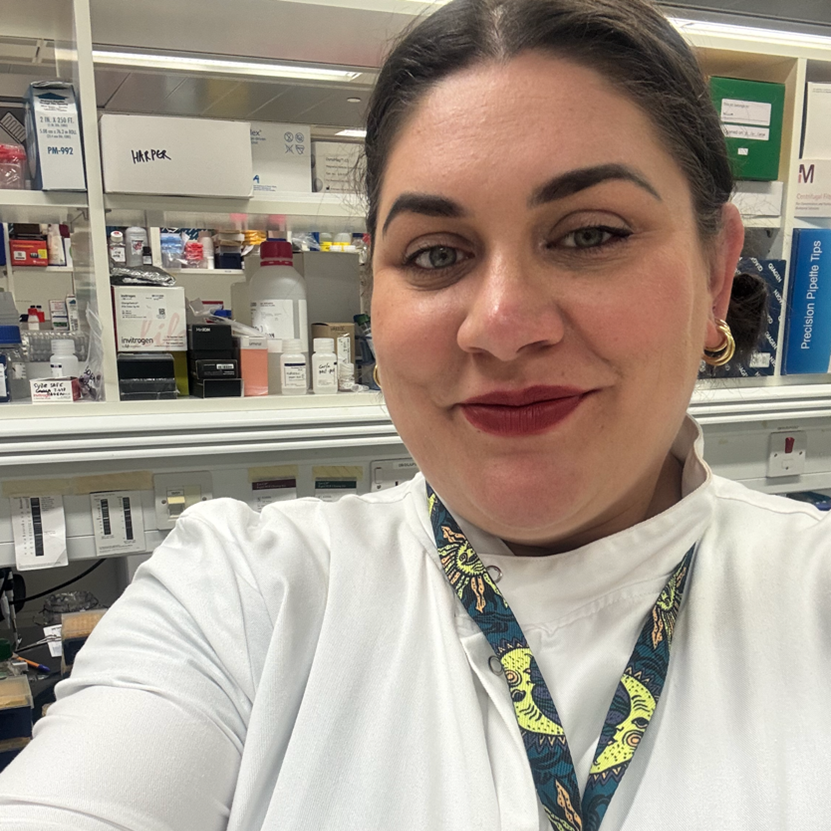

Joris Philip (2024 cohort)
University of Glasgow
ProjectTitle; Molecular mechanisms of repeated adaptative divergences in Arctic charr.
Joris is an evolutionary ecologist working on the speciation of the Arctic charr. He has been working on the Arctic charr since 2019 where he studied their behavioural ecology in what is known to be the most famous Arctic charr system, Lake Thingvallavtn in Iceland. His journey in the field of evolution have been inspired by Beverton and FSBI medal winners, Prof. Skuli Skulason, Prof. Colin Adams and Prof. Kathryn Elmer. His PhD research focuses on the genetic basis and molecular mechanisms of parallel evolution in the Arctic charr in Scotland. He uses replicated Arctic charr ecotypes as a model system to unravel the contribution of different gene regulatory processes to alternative phenotypic evolution and investigate their underlying genetic basis. Furthermore, Joris integrate a multi-taxa approach in order to determine the regulatory mechanisms underlying parallel phenotypic plasticity responses across salmonid species. Overall, he is interested in addressing the overarching question in ecological speciation by trying to connect evolutionary genomics, behavioural ecology and quantitative genetics to do so.

Claudio Silva de Freitas (2023 cohort)
University of Hull
Project title: Can hybrid “magic” accelerate speciation?
Claudio is a Portuguese/South African researcher investigating visual systems in fish. The aquatic light environment is unique because water differentially absorbs light spectra relative to depth, with a corresponding decrease in light intensity due to water molecules and dissolved particles, causing a scattering effect. Changes in genes associated with visual systems have the potential to disproportionately drive evolutionary change because they can simultaneously contribute to ecological adaptation and reproductive isolation in species where mate choice is based on nuptial colours (“magic traits”). With the development of CRISPR-Cas9 gene editing and the significant genomic data available on fish visual systems, Claudio has been able to test hypotheses regarding the adaptive significance of specific genomic changes and their ecological and reproductive consequences, while also defining visual plasticity. Haplochromine cichlids provide an ideal system for this research. The East African Great Lakes are home to several thousand endemic cichlid species, shaped by both natural and sexual selection.

Maisie Evans (2022 cohort)
University of East Anglia
Project title: Interactions between CMS-listed migratory sharks and commercial fisheries.
As a PhD student at the University of East Anglia (UEA), Maisie is collaborating with the Centre for Environment, Fisheries, and Aquaculture Science (Cefas) to assess impacts of commercial fisheries on sharks and rays listed on the Convention for the Conservation of Migratory Species. Aiming to aid species management in British waters, Maisie is working to determine bycatch levels, assess mortality rates, and determine future habitat suitability of the UK shelf, extending to British Overseas Territories, under different climate scenarios. Whilst working with Cefas, Maisie has gained experience on the RV Cefas Endeavour collecting stock assessment data in the English Channel and North Sea. Prior to her PhD, Maisie worked as a Tutor with the Field Studies Council, in finance for Operation Wallacea, and as Volunteer Coordinator at their field site in Honduras. She holds a Bachelor’s degree in Wildlife Conservation from Nottingham Trent University and a Master’s degree in Ecology and Conservation from UEA.

Rebecca Frances Bentley (2022 cohort)
University of Bristol
Project title: Evolution of functional morphology in a massive radiation of Neotropical catfishes.
Rebecca’s research focuses on the evolution of a large radiation of neotropical catfishes, Loricariidae to understand the interactions between ecology and morphology. Loricariidae represents over 1,060 species while the majority are detritivores and algivores they display a diversity of ecological niches. Using computerized tomography (CT) scanning technology, specimens from the Natural History Museum (NHM) of over 70 spp. has been used to describe a wide diversity of jaw morphology. The extent that Loricariid jaw morphology is functional (and reflects these niches) is being identified using phylogenetics and feeding efficiency trials so far inferring that the jaws are functional. The final aspect of the project will involve identifying the divergent gene expression between representatives of this family and how the gene expression develops in an individual species.
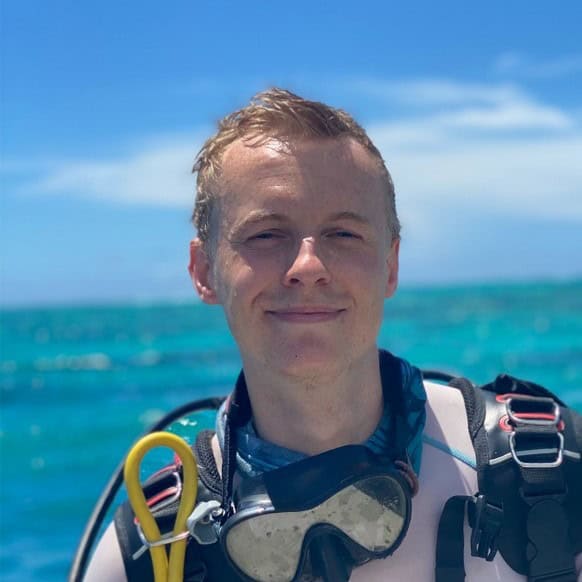
Ben Williams (2021 cohort)
University College London & Zoological Society of London
Project title: Advancing the use of passive acoustic monitoring to monitor fish communities
Ben is a PhD student at UCL and ZSL, researching how AI can be used to study coral reefs and their fish communities through the soundscape. In his PhD, Ben began by testing a range of machine learning approaches on whole soundscape data. He then developed a bomb fishing detector capable of identifying blasts over 20 km away and worked with a partner in the Indo-pacific to deploy this for two-years to measure its impacts. His third chapter produced SurfPerch, a pretrained neural network optimised to rapidly learn new fish and marine sounds. Finally, Ben worked with partners across multiple countries to collect a large dataset of reef restoration soundscapes and applied SurfPerch to measure how fish community functioning responds to restoration. Alongside his PhD, Ben has interned at Mars, who run the world’s largest reef restoration programme (buildingcoral.com), and at Google DeepMind in San Francisco.
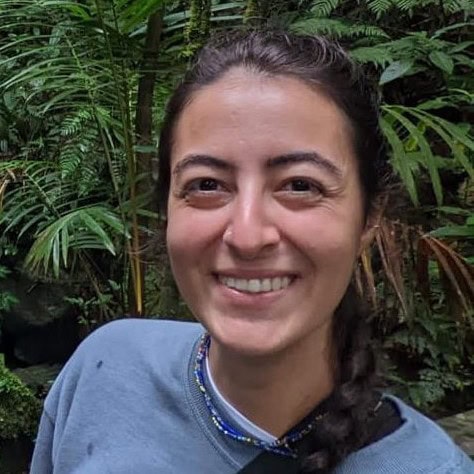
Mar Pineda (2021-)
University of Glasgow
Project title: Investigating capture vulnerability and trait-based selection in ornamental Amazonian fishes
Mar's research interests include understanding how individuals and groups respond to anthropogenic stressors and environmental change in aquatic ecosystems. Using both lab and field-based approaches, she employs multi-disciplinary approaches to explore relationships between ecology, behaviour, and physiology. While Mar’s research has previously focussed on marine and temperate freshwater species, her more recent work has focused on tropical ecosystems. Her PhD, conducted in collaboration with the National Institute of Amazonian Research, investigates the impacts of artisanal fishing in the Amazon. Specifically, her thesis explores the potential selective impact of capturing fish for the ornamental fishing industry, and how the relationship between an individual’s vulnerability to capture and its individual traits can be modulated by differences in environment. Mar’s work aims to shed light on a growing but underexplored trade and contribute to a broader understanding of fisheries selection in a changing world.
We aim to achieve the highest standard, maintained through the good will and dedication of the council (who are the charity trustees) for the FSBI. We are always interested to hear member feedback, and are pleased to attend the Annual Symposium to ensure we stay in touch with all those concerned.
The FSBI is registered in the United Kingdom as a charity (Number: 256475) and is affiliated to the Royal Society of Biology. Contact FSBI support Line at 020 3925 3477 or Email theteam@fsbi.org.uk