
FSBI 2027 Annual Symposium
26th-30th July 2027
Environmental Drivers of Fish Populations:
Distributions, Migration, Adaptation


The 2027 Symposium, convened by the National Institute of Oceanography and Applied Geophysics in Trieste, focuses on the environmental drivers of fish populations - their physiology, distributions, migrations and adaptations.
The conference aims to bring together scientists from a range of disciplines to explore ways of integrating our research and strengthening relationships with stakeholders and policymakers.
For any enquiries please contact FSBI_2027_annual_symposium@ogs.it
Symposium Themes
Fish populations are facing rapidly changing environmental conditions, including shifts in temperature, oxygen, pH, productivity, pollution and other key factors. These changes are affecting fish physiology, growth, reproduction, distributions and migrations, with differences in species’ sensitivity and adaptive potential adding further complexity. Understanding how environmental drivers shape fish populations and communities is essential to anticipate future changes and their consequences for ecosystem functioning, as well as how these changes will affect fisheries exploitation. Addressing these challenges requires interactions among physiology, genetics, behavioural sciences, ecology and modelling, bringing together different perspectives to better understand and predict how fish populations will respond to ongoing environmental change.

Physiological responses and population-level consequences
Environmental change can directly affect fish growth, respiration, reproduction and mortality, with consequences that extend from individual performance to population dynamics. This theme will explore how fish physiology responds to changing environmental conditions and how these responses influence population recruitment and survival

Productivity and food webs
Environmental change can alter fish population productivity and the interactions between species within aquatic food webs. This section will explore how changing environmental conditions influence population dynamics, fisheries productivity, community structure and trophic dynamics, from individual populations to broader ecosystem processes

Distribution and movement
Variations in environmental conditions are changing where fish occur and how they move across habitats and regions.These shifts affect connectivity among populations, with consequences also for gene flow, population structure and genetic diversity. This section will examine the environmental drivers of fish distribution movements across population connectivity, using empirical data derived from tools such as telemetry and natural tags, genetic markers, models and predictive approaches to understand and anticipate these changes.

Adaptive management in a changing ocean
Shifting oceanographic conditions alter populations and communities that need to be accounted for by management actions and policy. This section will examine how changing ecological drivers are accounted for in assessment models, policies, climate-ready management, and spatial protection in order to rebuild fish populations and restore ecological resilience

Adaptative capacity and evolutionary responses
Fish populations differ in their genetic diversity and evolutionary potential to respond to changing environmental conditions. This session will explore the genetic and genomic mechanisms underlying adaptation, including adaptive genetic variation, local adaptation and rapid evolutionary responses. Particular attention will be given to how environmental heterogeneity shapes adaptive variation and how emerging approaches, such as seascape genomics, can help assess the evolutionary potential of fish populations under ongoing environmental change
Key Dates
Note that this is our draft timeline and subject to change.
Abstract submission deadline: 1 February 2027
FSBI Travel grant deadlines: 1 December 2026, 1 March 2027*
Registration opens: 1 February 2027
Early bird and presenter registration closes: 1 May 2027
Late registration closes: 1 July 2027
Conference dates: 26-30 July 2027
* https://fsbi.org.uk/travel-grants, but please consider other travel grants as well as our grants are competitive (e.g. BES, Company of Biologists).
Venue
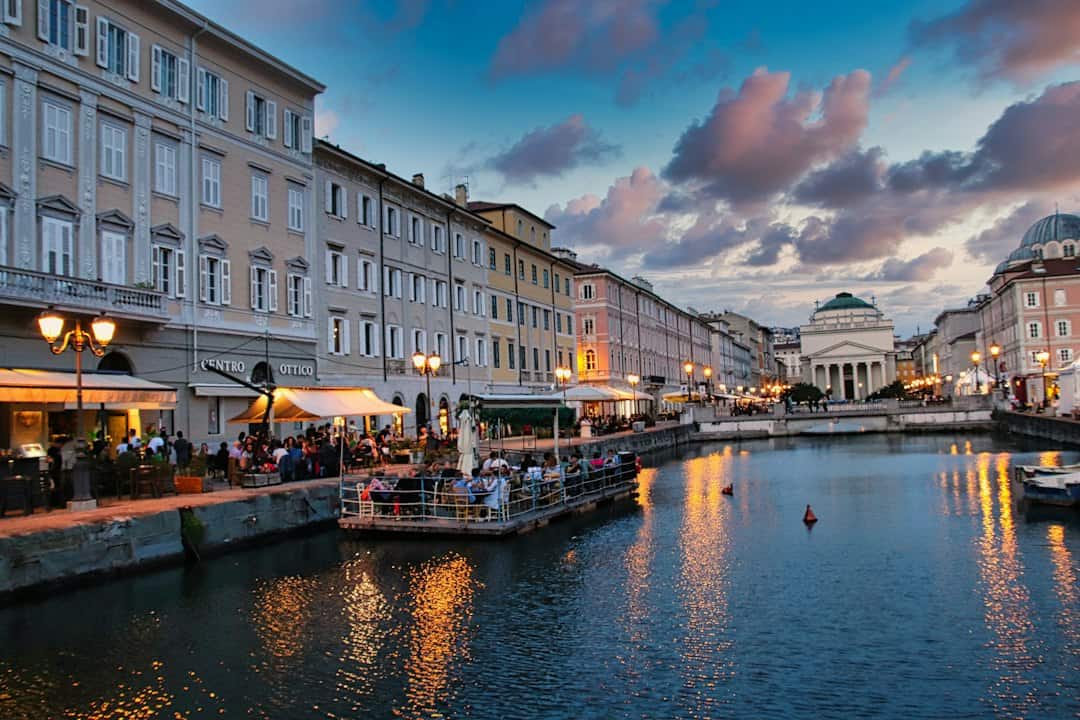
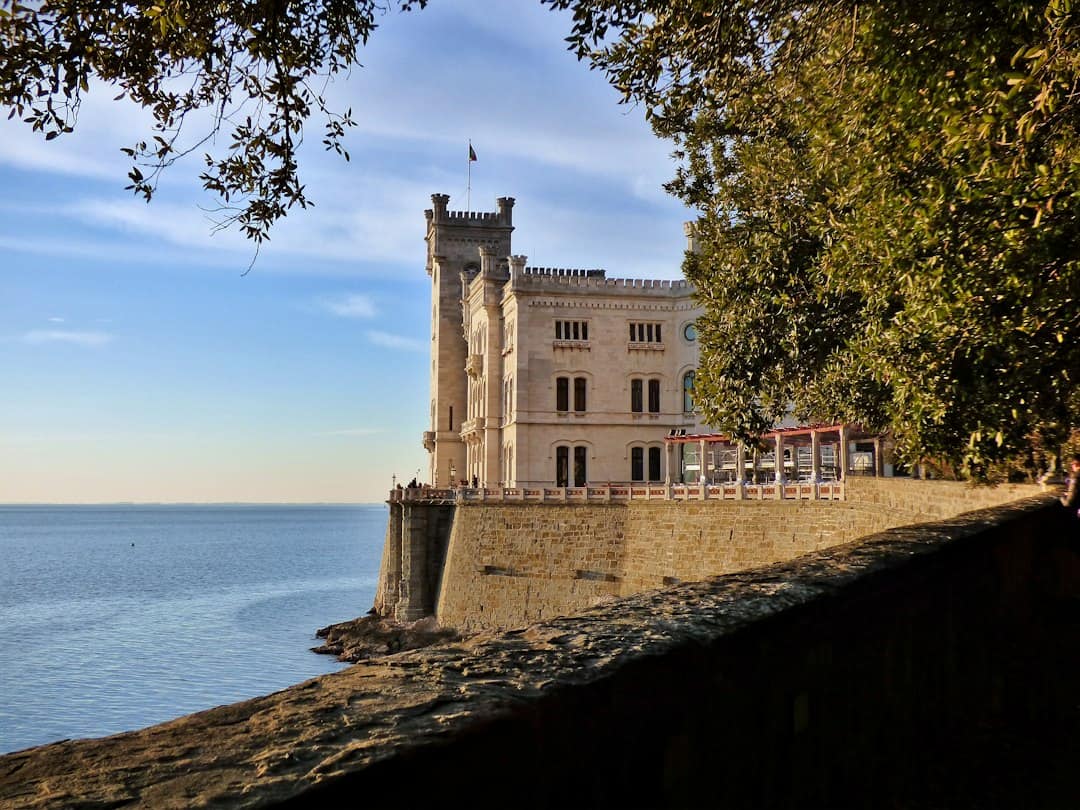
The 2027 symposium will be held in the beautiful city of Trieste. More information coming soon, both about the conference venue and the excursions. Just remember to bring your snorkel!

Travel information
With many people coming to this meeting from overseas, this is really a moment for you to think about your travel choices. We will again be commending everyone that makes greener travel choices, and be awarding the best stories and efforts one of three “Green Travel Awards” at the 2027 symposium banquet. These awards are intended to promote awareness of the climate crisis and to encourage those that are coming in person to make greener travel choices wherever possible.
We realize that funding issues, family commitments and other time or work constraints may prevent you from going as ‘green’ as you would like to, but we applaud any efforts that reduce your environmental footprint. So please consider trying to use greener modes of travel and share your story to be in the running for a Green Travel Award.
Help us to promote these new awards by sharing your travel plans/ideas/journey on social media tagged with #FSBIGreenTravel. To enter the award please fill out this form: https://tinyurl.com/FSBIGreenTravel. We will collate and share our favourite stories, and at the banquet we will announce three winners (Fish Net Zero; Not Flying Fish; Fish Against Flying). Any questions please email anna.sturrock [at] essex.ac.uk
You can reach the city of Trieste both by train and plane.
Trieste train station is connected to most northern Italy cities by both Trenitalia(https://www.trenitalia.com/en.html) and Italo (https://www.italotreno.com/en), to Austria and Germany by OBB (https://www.oebb.at/en/).
Closest airports are:
• Trieste Airport (https://triesteairport.it/en/): Trieste Airport – Trieste Central Station,
approximatly 25 min by shuttle-train
• Venice International Airport (https://www.veneziaairport.it/en_gb/)
From Trieste Airport and Venice International Airport, you can reach Trieste by train via
Trenitalia (https://www.trenitalia.com/en.html.
• Ljubljana Airport (https://www.lju-airport.si/en/).
Transfer service to Trieste from Venice and from Ljubljana is available at
https://www.goopti.com/en/transfers/italy-trieste/italy-trieste-trieste-airport-trs
Instructions for Presenters
Posters
A poster consists of easily read text and graphics, and describes your study’s objectives, methods, findings, and conclusions. Here is a great blog post from the British Ecological Society with tips on making an engaging and eye-catching poster.
The preferred poster size format is A0 (841mm wide x 1189 mm high or 33.1 inches x 46.8 inches). If you prefer a smaller size, that is fine, but no single dimension should be greater than 1189 mm.
Posters need to be a single sheet of printable stock that can be affixed to the display board using Velcro, which we will provide.
Oral Presentation
The format of the oral presentations is still under discussion and will be confirmed here in due course.
Speed Talks
The format of speed talks is still under discussion and will be confirmed here in due course.
For both oral presentations and speed talks: the preferred format for the slides is Powerpoint widescreen (16:9).
We will provide instructions on uploading your slides closer to the meeting.
Special Issue of the Journal of Fish Biology
More details coming soon
Symposium Committees
Local Organising Committee
Damiano Baldan |
Ivano Vascotto
Karolina Maria Czechowska
Lorenzo Fant
Marina Lipizer
Martina Spiga
Maurizio Ingrosso
Rocco Auriemma
Simone Libralato
Valentina Tirelli
Scientific Advisory Committee
Alberto Pallavicini (University of Trieste)
Alessia Cariani (University of Bologna)
Anna Sturrock (University of Essex)
Carlotta Mazzoldi (University of Padua)
Giorgio Dall’Olmo (OGS)
Simone Libralato (OGS)
Stefano Mariani (Liverpool John Moores University)

The 2027 FSBI Symposium is proudly convened by
And sponsored by

We aim to achieve the highest standard, maintained through the good will and dedication of the council (who are the charity trustees) for the FSBI. We are always interested to hear member feedback, and are pleased to attend the Annual Symposium to ensure we stay in touch with all those concerned.
The FSBI is registered in the United Kingdom as a charity (Number: 256475) and is affiliated to the Royal Society of Biology. Contact FSBI support Line at 020 3925 3477 or Email theteam@fsbi.org.uk